Cardiology
Chest pain, arrhythmia, blood pressure, echocardiography and heart-failure follow-up.
Vitalis blends clinical care with an interactive 3D atlas built from real scanned anatomy. Spin the model, peel away skin, muscle and bone, and tap any structure to learn what it does — then talk to a specialist about it.
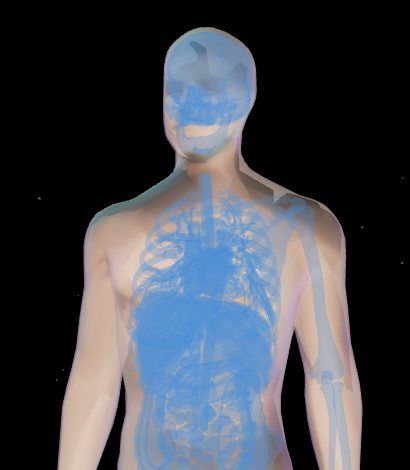
Five explorable systems from a real anatomical dataset, rendered live in your browser. Drag to orbit, scroll to zoom, click any structure for a plain-language explanation.
Not an illustration: the meshes are segmented from medical imaging (BodyParts3D), so every structure sits where it really sits.
Curious about a structure in the atlas? Each system maps to a clinical team you can actually book.
Chest pain, arrhythmia, blood pressure, echocardiography and heart-failure follow-up.
Headache, dizziness, epilepsy, neuropathy, stroke rehabilitation and memory clinics.
Fractures, joint pain, sports injury, spine care and post-operative physiotherapy.
Asthma, COPD, chronic cough, sleep apnoea and full lung-function testing.
Reflux, IBS, liver health, endoscopy and dietitian-led metabolic programmes.
Strain, tendinopathy, movement screening and return-to-play planning.
Open the atlas and find the structure you're worried about. Read the plain-language card.
Attach the structure to your intake form so the clinician sees exactly what you meant.
Meet a specialist online or in clinic, with your notes and imaging already in the room.
Between 60–100 bpm is "normal" — but trends matter more than any single reading.
Loading, vitamin D and protein: the three levers with actual evidence behind them.
Sudden, severe, or different from usual — the red flags to stop scrolling for.
The meshes come from BodyParts3D, a real human anatomy dataset segmented from medical imaging by the Database Center for Life Science (CC BY-SA 2.1 JP). They are decimated for the web, so fine detail is reduced — but every bone, organ and muscle is a real scanned structure in its real position. It supports a conversation with a clinician; it doesn't replace one.
Yes. Each layer is a separate compressed mesh (about 1–2.6 MB) loaded only when you open it, the renderer scales its pixel ratio to your device, and every control has a touch target of at least 44 px.
This front-end demo keeps your last viewed layer in local storage on your own device. Nothing is sent anywhere.
Yes — the explorer opens straight to any layer via a URL such as ?layer=skeleton, so you can bookmark a slide-ready view.
Open the atlas, or book 20 minutes with a specialist who speaks in sentences, not acronyms.
Loading anatomy meshes…
Real anatomical data · BodyParts3D (CC BY-SA 2.1 JP)